 Search
 EN
 English
 Deutsch
 Français
 Español
 italiano
 cn
 jp
 kr
You do not need expensive frames or a computer on your face to look smart in glasses. What you need is a restrained shape, a material that holds its finish, and a fit that keeps your pupils centred in the lenses.
The short answer: round, oval, browline and slim rectangular frames in tortoiseshell, matte black, clear or brushed metal read as thoughtful. Heavy oversized shapes and large high-contrast logos read as fashion-first. Thin pure titanium or quality acetate looks more considered than thick generic plastic, and lens coatings matter more than the name printed on the temple.
If by "smart glasses" you mean eyewear with audio, translation or a camera, the electronics change what the glasses do, not how you look. The frame still decides that.
Below are the specifics: which shapes work, which materials last, the measurements worth checking, and what to specify if you are ordering a run of frames rather than buying a single pair.
Content
What Actually Creates the Smart Impression
Four signals do almost all the work: silhouette, rim thickness, colour and fit.
People read restraint as competence. A symmetrical, medium-weight frame with clean lines suggests someone who chose deliberately. A chunky novelty frame with a large logo suggests someone who bought on impulse. The same person, wearing the two frames, gets treated differently in a meeting — and that is the whole effect you are shopping for.
| Signal | Reads as intelligent | Reads as something else |
|---|---|---|
| Silhouette | Round, oval, browline, slim rectangle | Oversized, heavy angles, exaggerated cat-eye |
| Rim thickness | 3–6 mm rim depth, medium weight | Chunky 10 mm rims or hairline wire fronts |
| Colour | Tortoiseshell, matte black, clear, grey, brushed metal | Neon, high-gloss brights, large contrast logos |
| Hardware | Simple hinges, thin temples, clean nose pads | Layered decals, novelty temples, heavy branding |
| Fit | Frame top near the brow, pupils centred | Frame sliding down, lenses sitting far from the eyes |
Notice that none of these signals is a brand. A modest acetate frame in the right colour and a correct fit reads smarter than a heavy designer frame that keeps slipping down your nose.
Frame Shapes That Read as Scholarly or Professional
Shape is the fastest lever you can pull: slim squares and browlines read professional, rounds and ovals read academic, and pilots read practical.
| Shape | Impression | Usually suits | Watch out for |
|---|---|---|---|
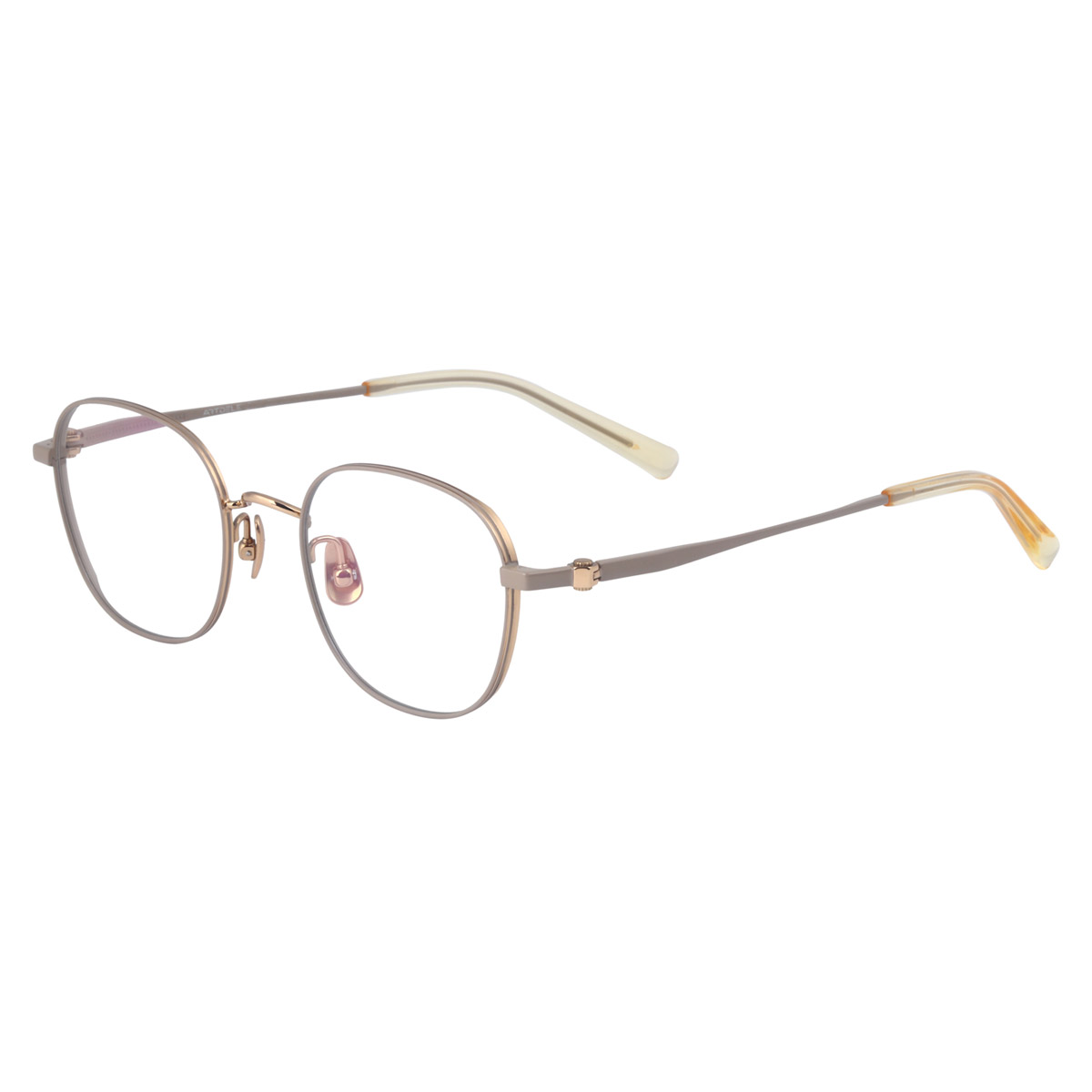
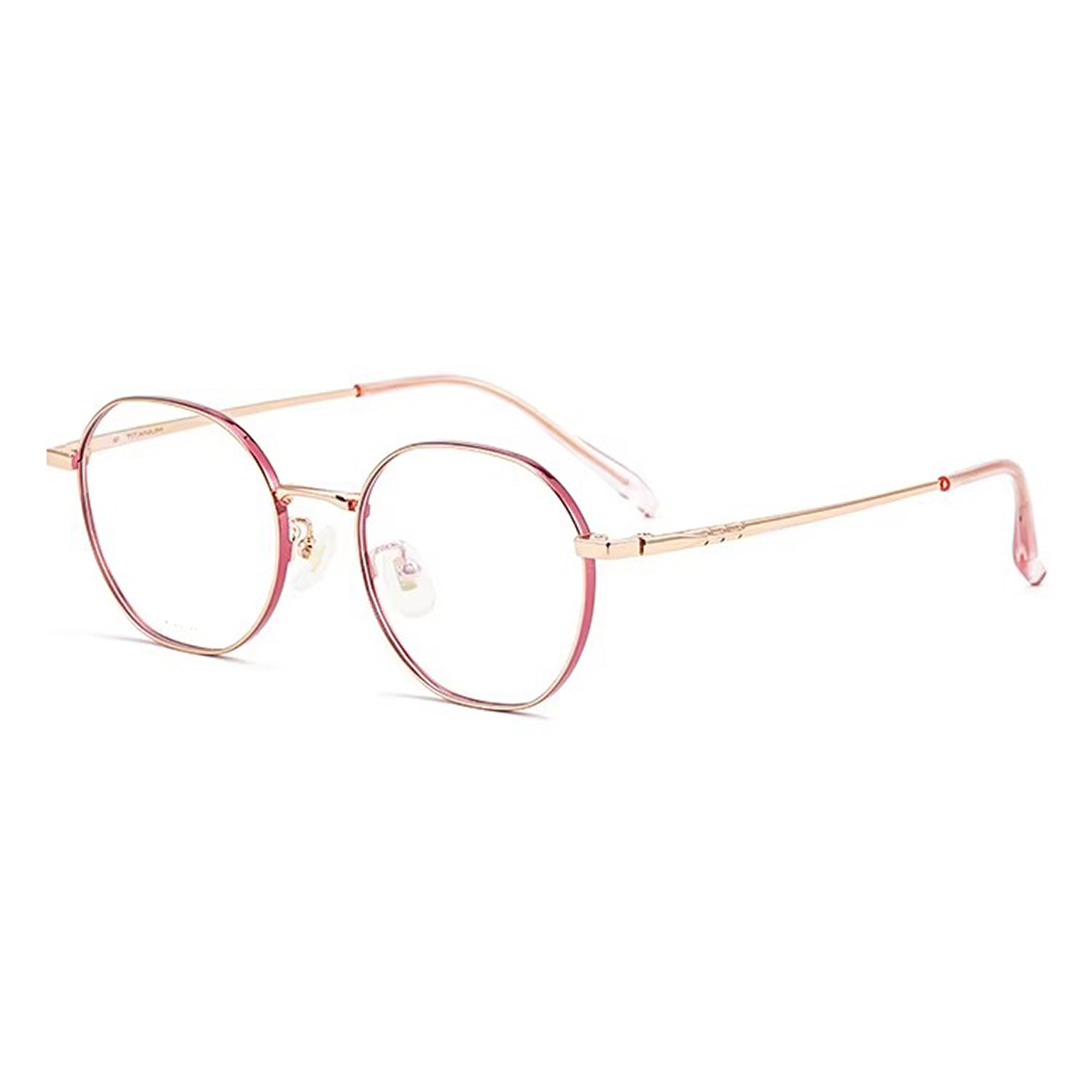
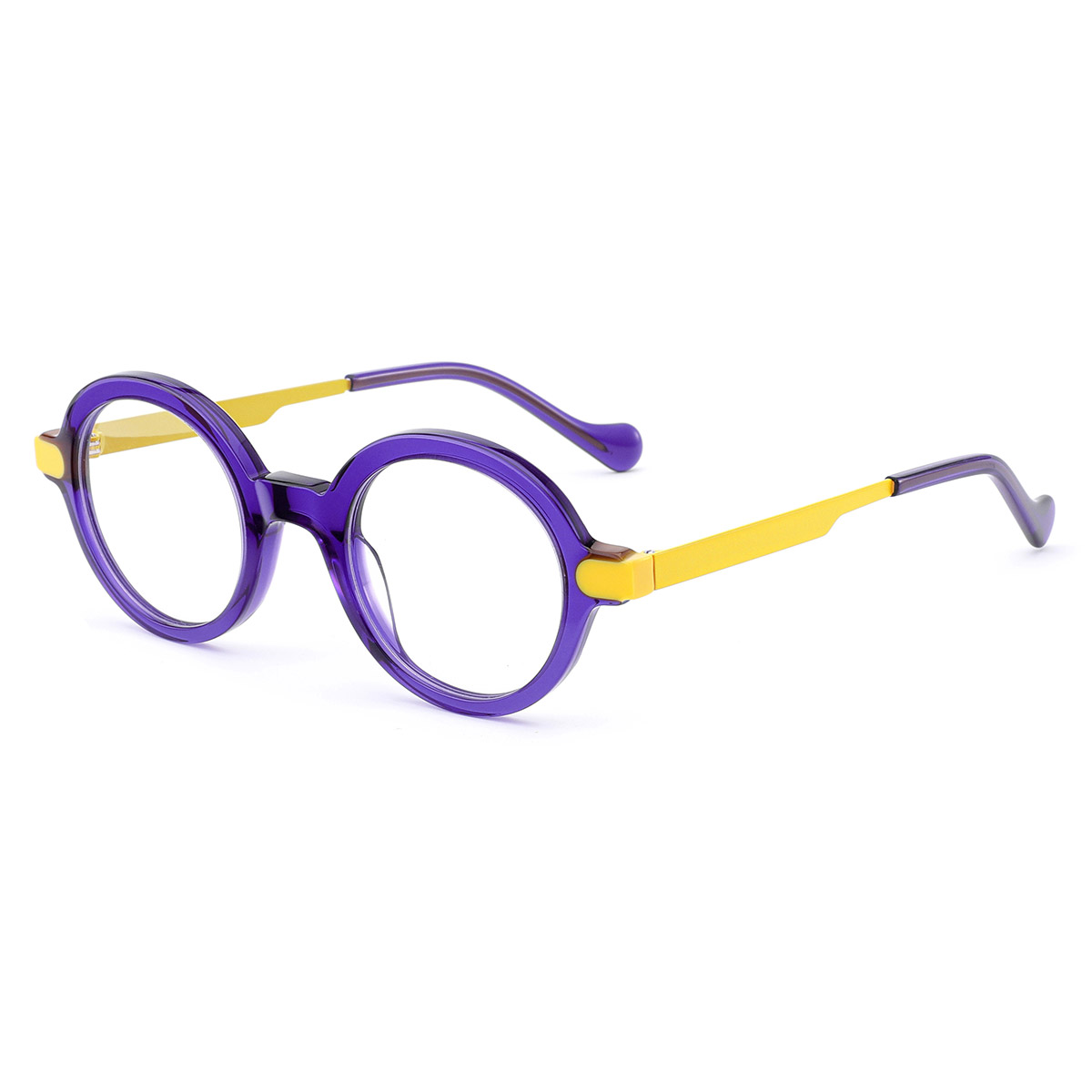
| Round / oval | Academic, approachable | Square jaw, heart, oval faces | Very round plus thick rims can look like a costume |
| Browline | Considered, mid-century professional | Oval, round, longer faces | A heavy brow bar can dominate a small face |
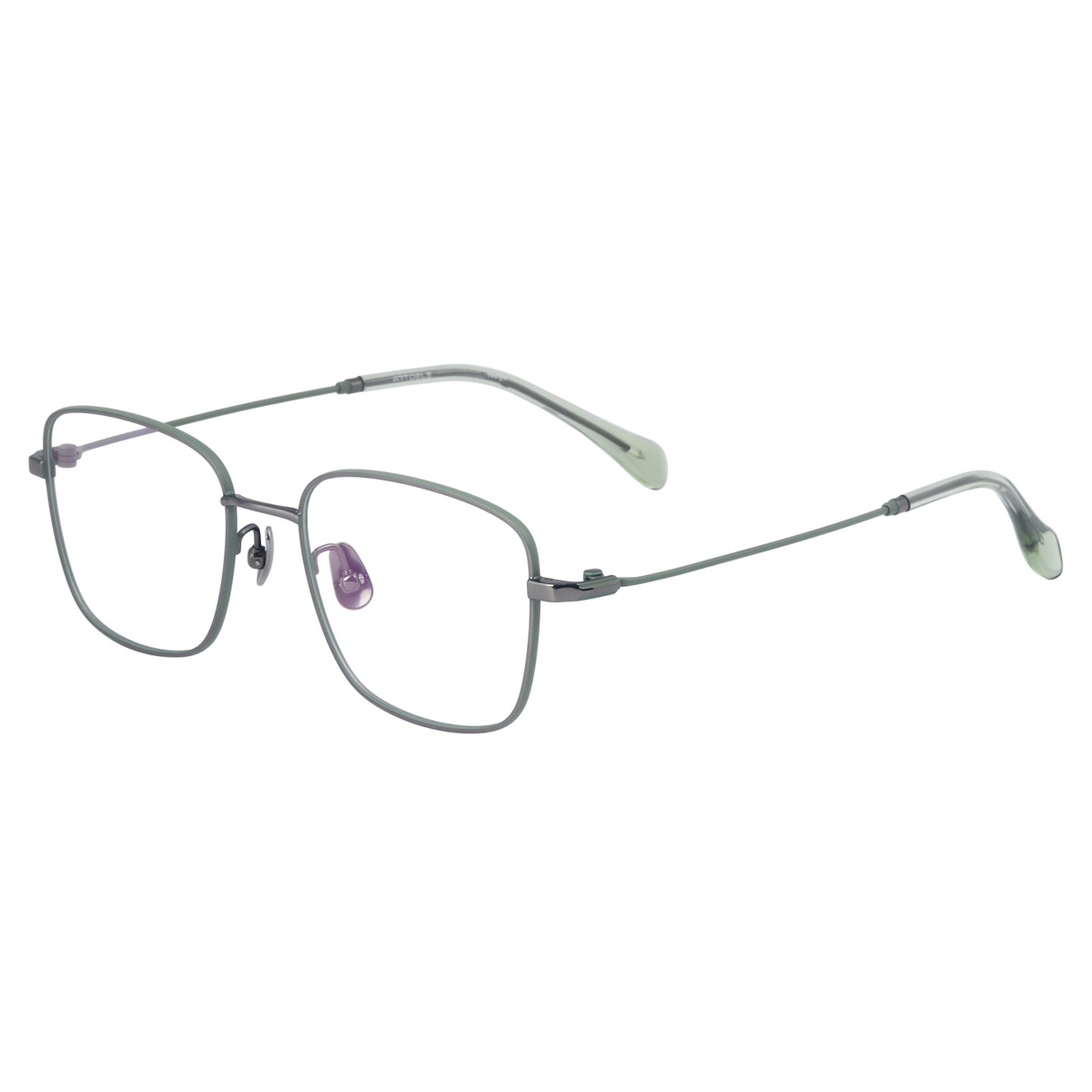
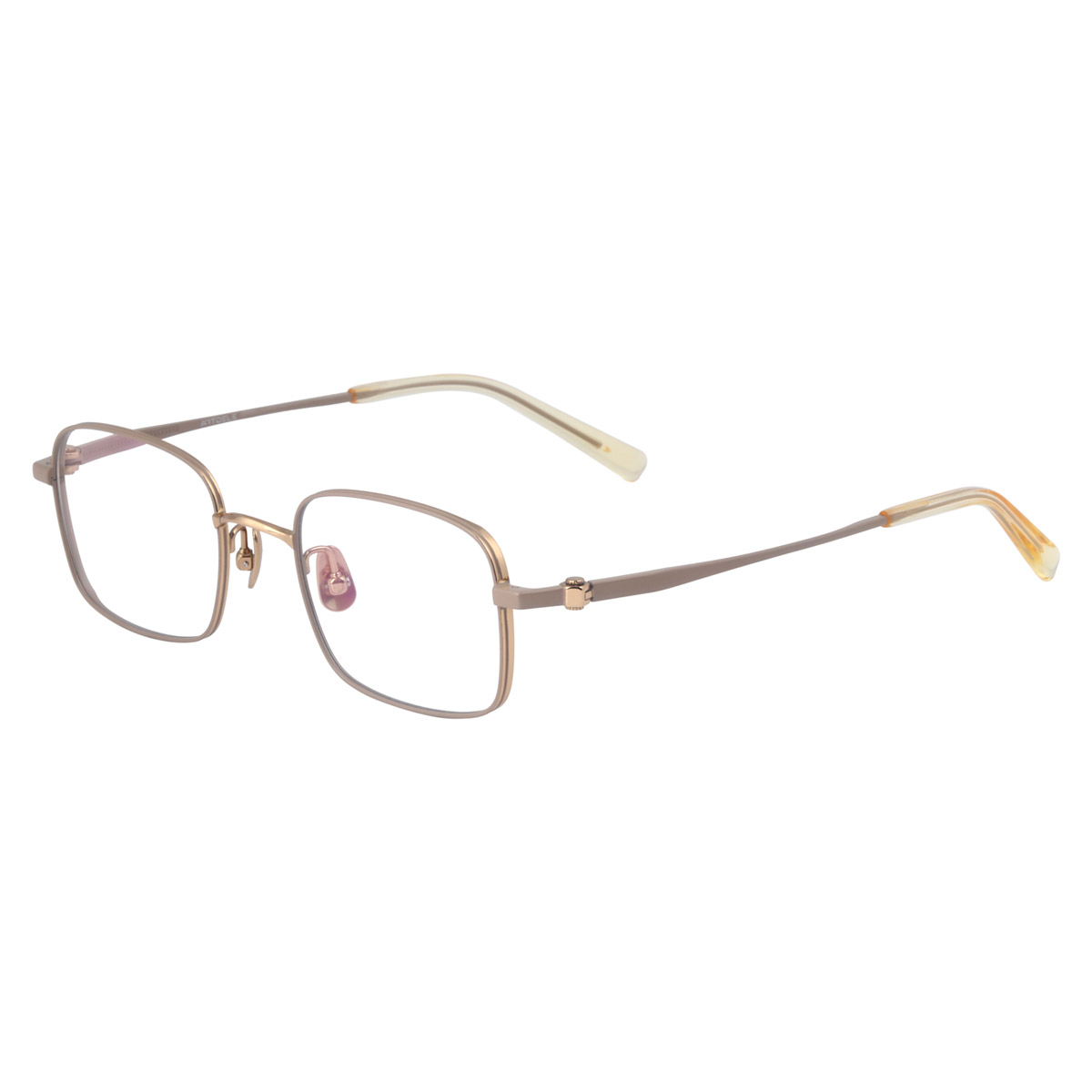
| Slim square / rectangle | Business, precise | Round, oval, heart faces | Oversized squares drift into trend territory |
| Panto (round top, flat base) | Literary, creative | Most face shapes | Shallow lens depth can crop a strong prescription |
| Aviator / pilot | Practical, confident | Square, oval faces | Reads casual rather than office |
| Cat-eye | Confident, editorial | Oval, heart, square faces | Sharp angles can overwhelm soft features |
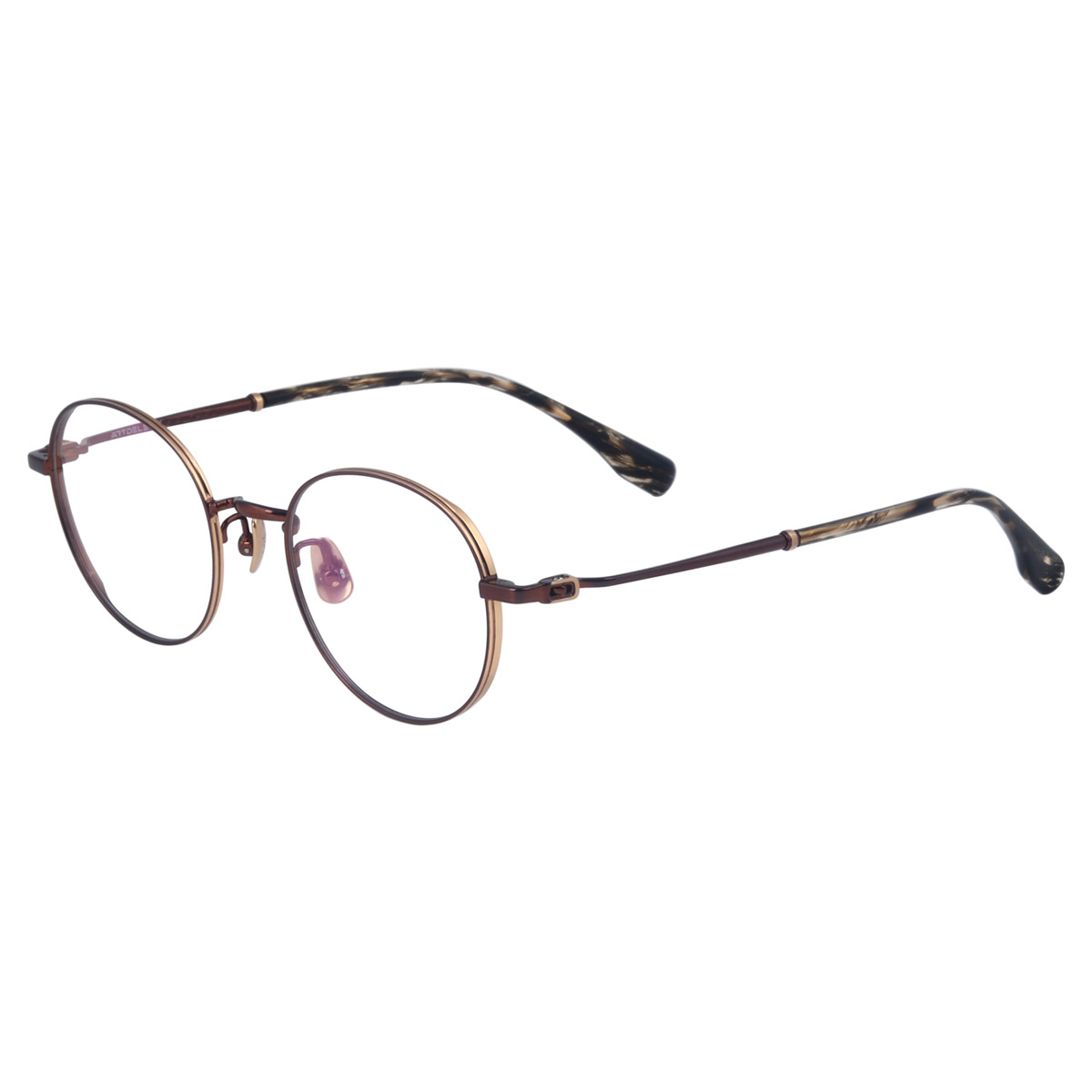
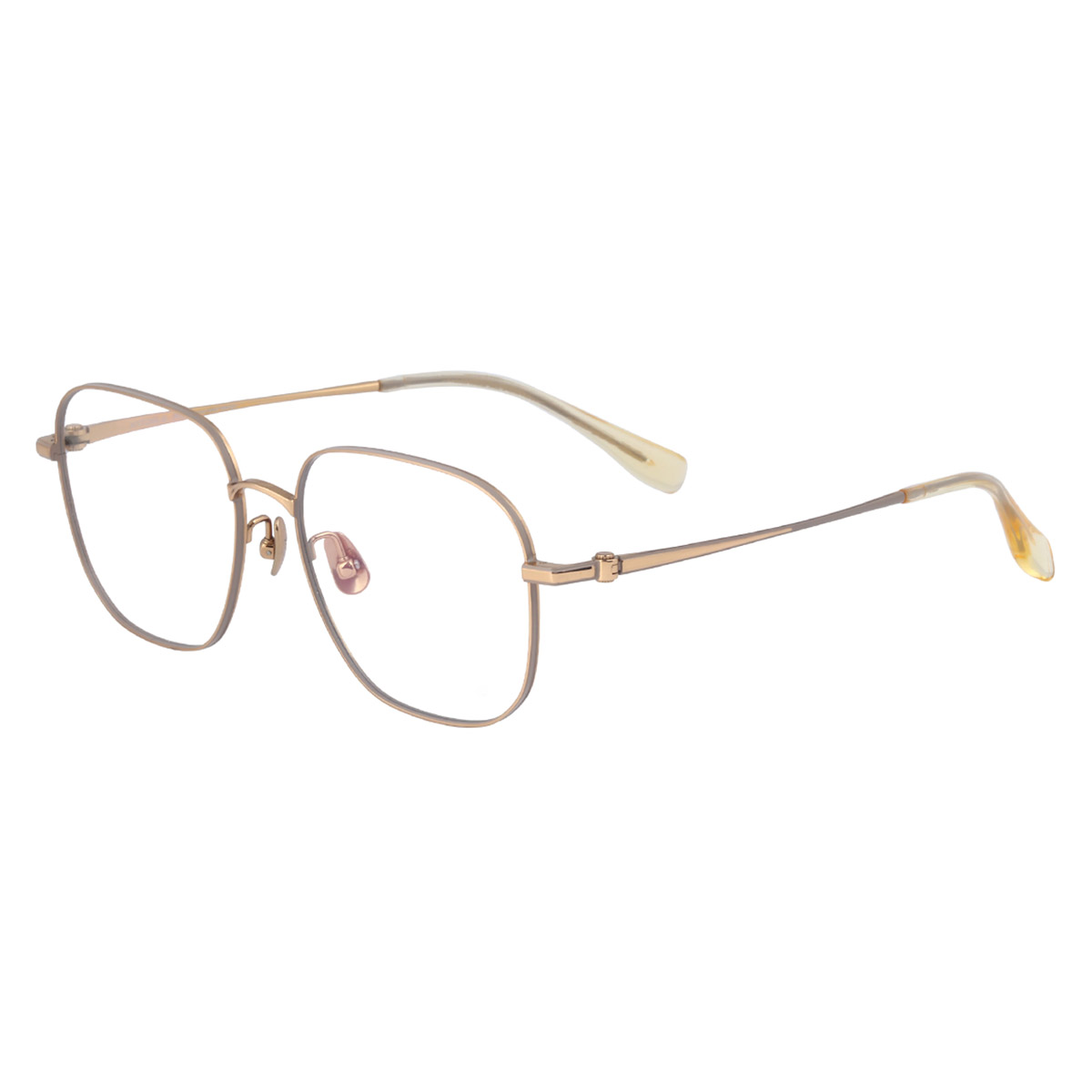
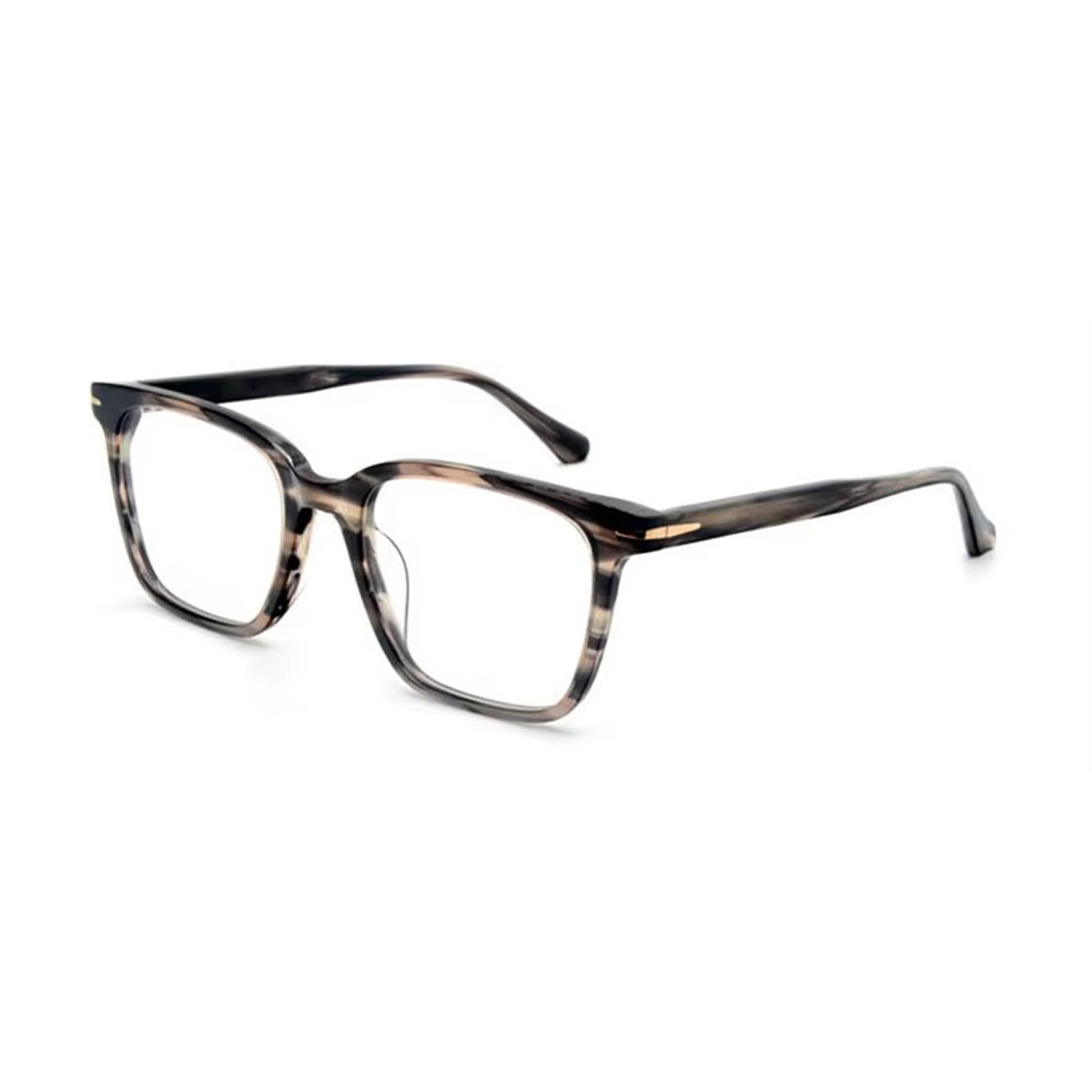
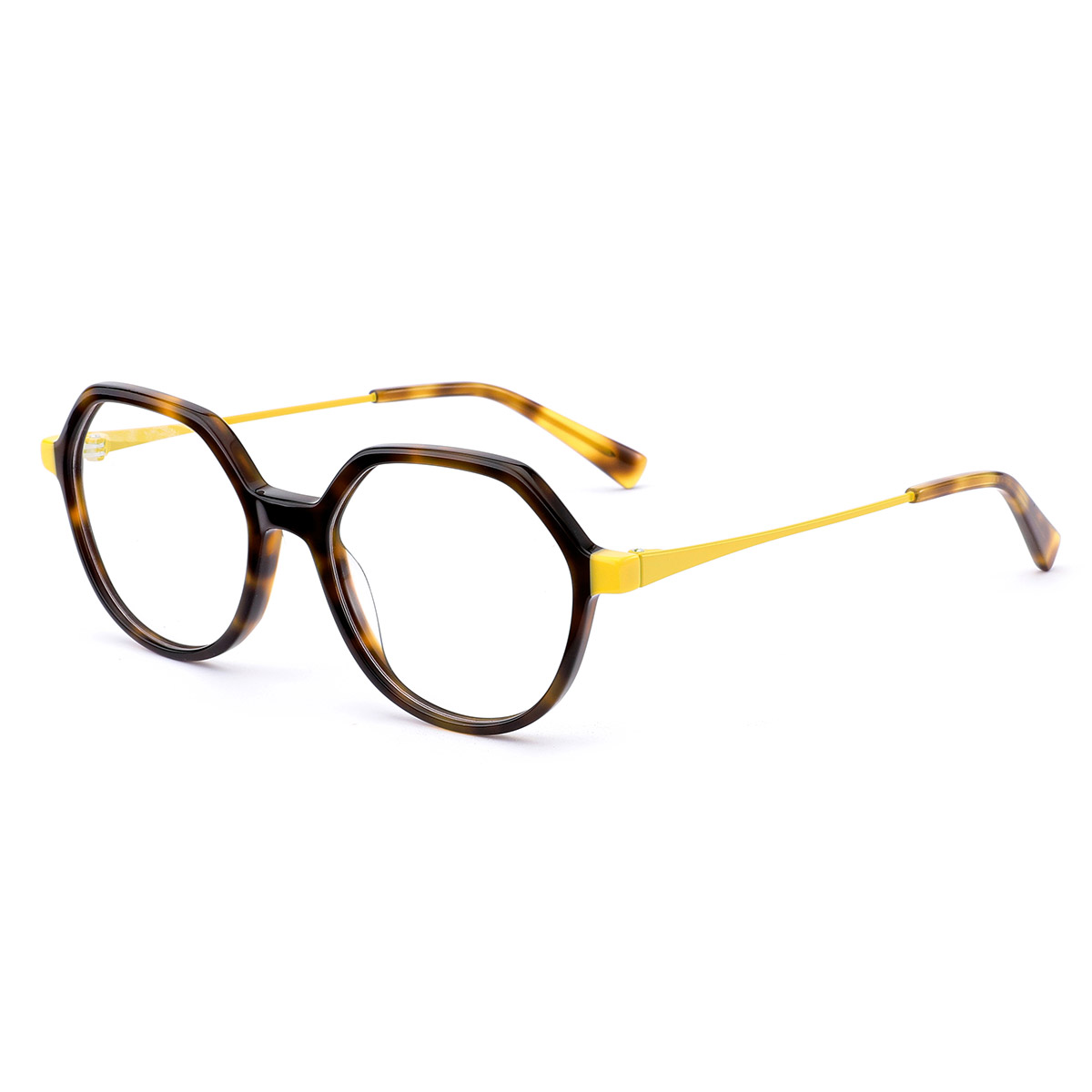
For an office setting, a 48–52 mm lens width slim square with a 3–5 mm acetate rim is the safest bet. For a more academic look, try a 46–50 mm round panto in tortoiseshell. Browlines sit between the two and suit people who want presence without weight.
 Italian Business Square Acetate Optical Frame Model 8736Acetate square optical frame 8736 with thickened lens ring and metal details, suited to prescription and blue-light lenses in professional settings.View Product →
Material, Colour and the Small Details
Material decides how a frame ages, and how a frame ages changes the impression it gives.
- Cellulose acetate: warm depth of colour, adjustable with heat, typically 25–35 g. Best choice for a classic, considered look.
- Pure titanium: often under 15 g at the front, corrosion and sweat resistant, hypoallergenic, and it holds a very thin profile.
- Titanium with acetate: metal structure with an acetate front, useful when you want warmth plus strength.
- Ultem and TR90: flexible and impact resistant, the practical pick for sport and for children.
- Stainless steel or memory alloy: thin and springy, good for slim temples that keep their shape.
- Carbon fibre: very light with a matte technical finish, better for outdoor use than for a formal meeting.
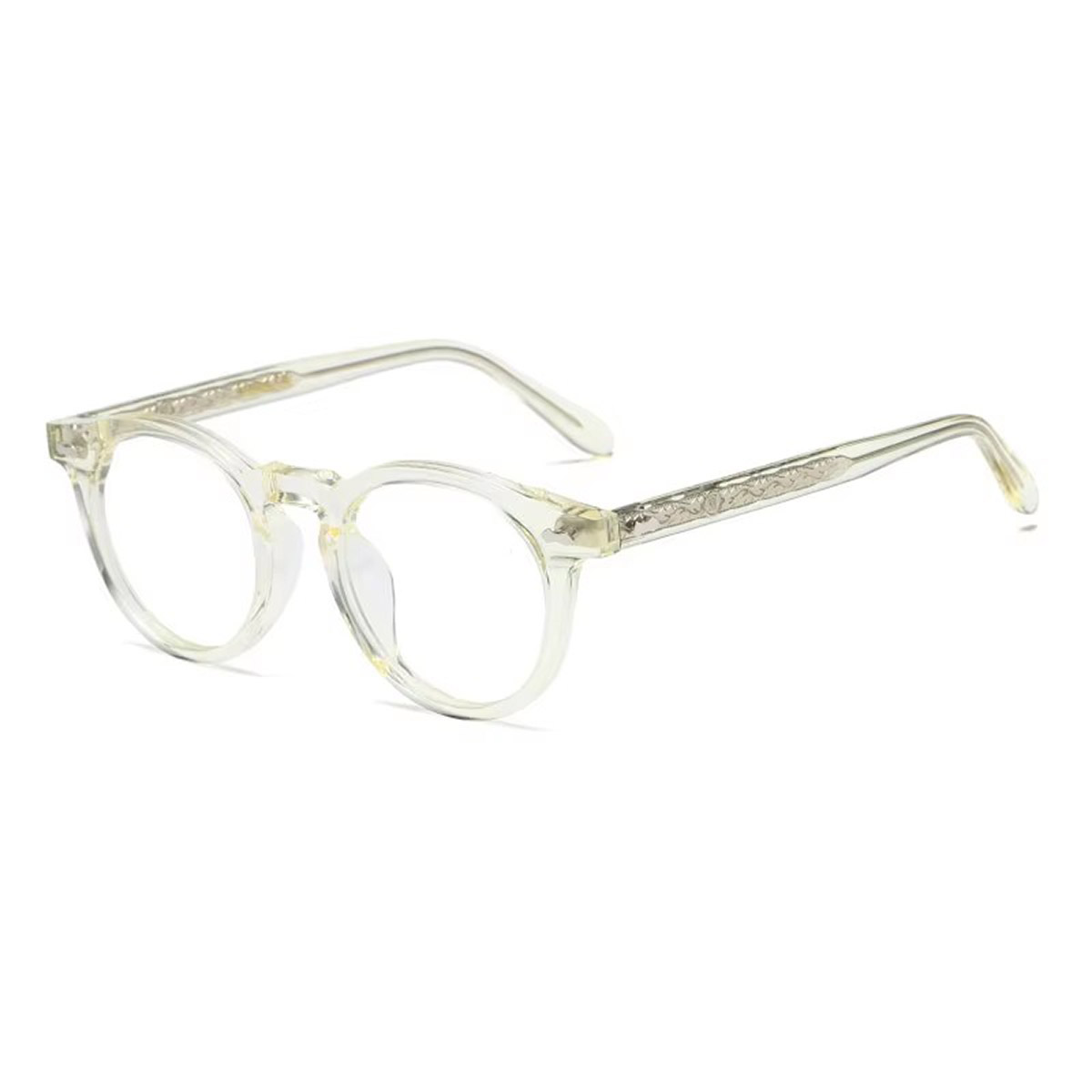
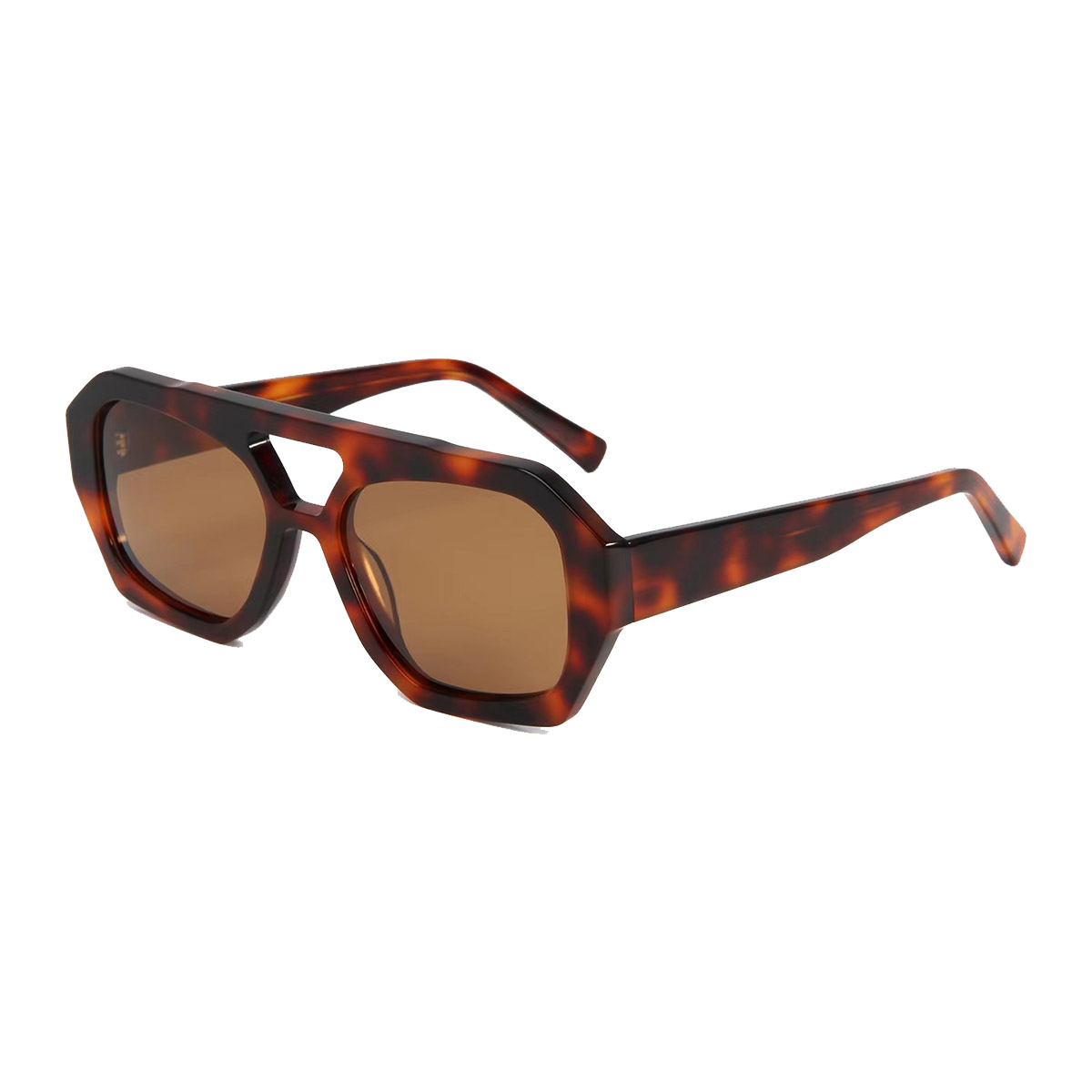
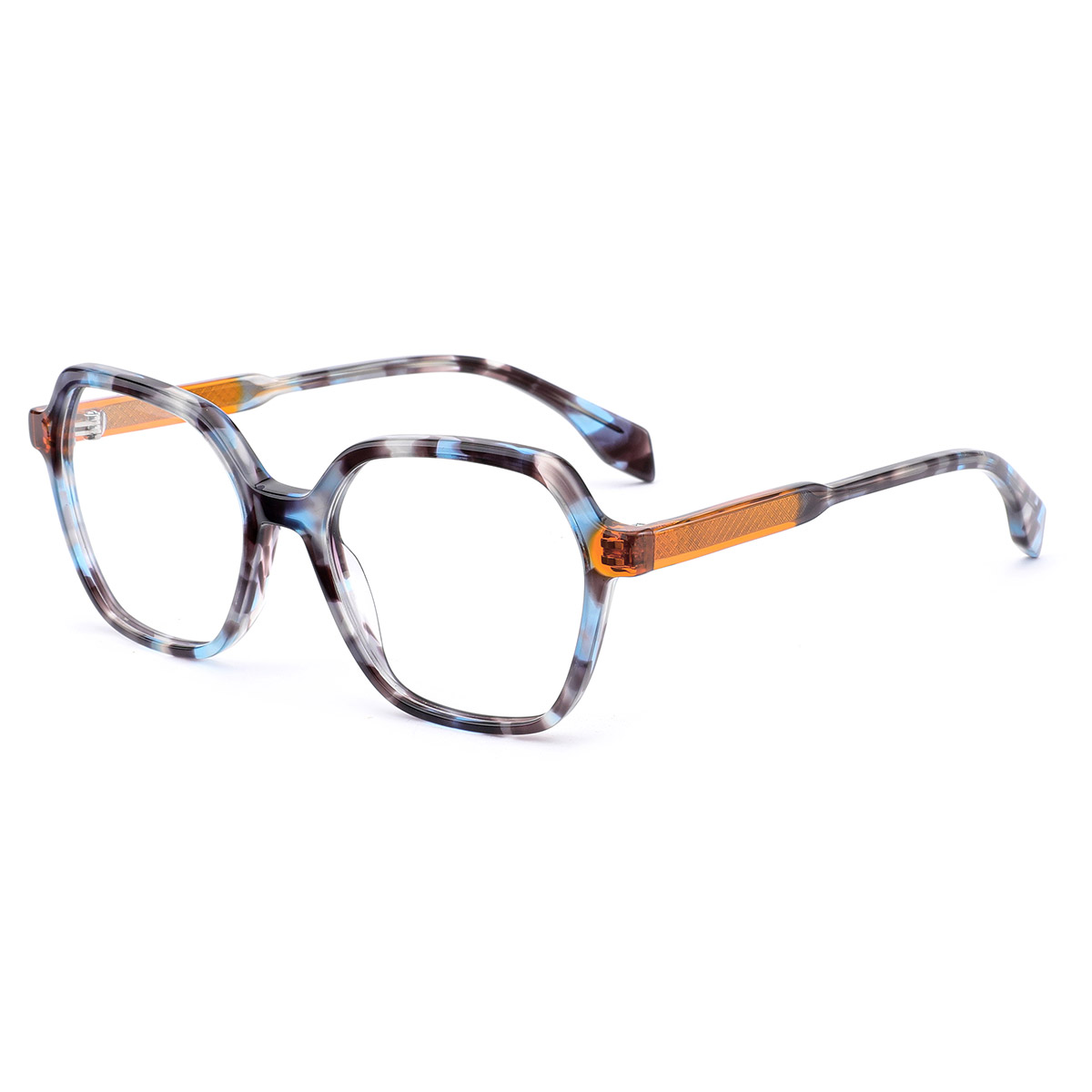
Colour does the second half of the job. Tortoiseshell reads warm and classic, matte black is neutral and businesslike, clear or crystal looks modern, and brushed grey or gunmetal signals technical precision. Deep blue and olive are quiet variations that still look deliberate.
Then check the details: 1.5–2.5 mm temples, simple barrel hinges rather than layered decoration, and adjustable silicone nose pads that stay where you put them.
Fit Is What People Actually Notice
A frame that fits badly looks careless no matter how good the material is, and fit can be measured rather than guessed.
- Pupil position: aim for the pupil within about 1–2 mm of the vertical centre of the lens. Off-centre pupils make even good frames look accidental.
- Frame width: the front should sit within roughly 2–4 mm of the widest part of your face.
- Bridge width: nose pads should rest on the sides of the nose, not on the bridge, and should not leave red marks after an hour.
- Temple length: 135 mm, 140 mm and 145 mm are the common sizes; the temple should run level or slightly down to the ear, never pressed outward.
- Weight: 20–28 g is comfortable for all-day optical wear. Audio glasses usually add 15–25 g, which you feel by late afternoon.
- Vertex distance: above roughly ±4.00 D, a frame that sits too far from the eyes distorts the face outline behind the lens.
If you are ordering rather than buying one pair, ask for the measured temple length, bridge and lens width instead of an unqualified "medium". These are the numbers that decide whether the product comes back, and you can compare them across the full optical frame range before committing.
If You Mean Smart Glasses, Decide in This Order
Smart glasses add function, and they rarely add polish, so decide on the frame first and the electronics second.
- Audio and calls: open-ear speakers, useful, but thicker temples than a plain optical frame.
- AI translation and voice assistants: genuinely practical when travelling, heavier on battery.
- Photochromic or tinted lenses: one pair for indoors and outdoors, at the cost of a slight residual tint.
- Cameras and displays: the most visible technology, and the most likely to draw attention to the device rather than to you.
A simple test: would you wear the frame with the electronics switched off? If yes, the glasses work for you. If not, no chip will fix the silhouette.
 AI Waterproof Multi-Language Translation Smart Sunglasses Model 6557Smart translation sunglasses with real-time spoken conversion, waterproof sealing, 100% UV protection, directional audio, and anti-glare PC lenses for outdoor communication.View Product →
Lenses Support or Undo the Look
Lenses can undo a good frame faster than a poor frame can.
- Anti-reflective coating: the single best upgrade. It removes reflections so people can see your eyes during conversation.
- Blue-light filtering: choose a version with minimal residual tint; a strong yellow cast reads as gaming rather than professional.
- High-index material: 1.60 to 1.74 keeps edge thickness down above roughly -4.00 D, which keeps the frame looking slim.
- Photochromic: one frame that works indoors and outdoors, worth it if you commute.
- Anti-fog: essential for cycling and cold-weather wear, where fogged lenses ruin the whole effect.
If near vision is part of the brief, a short guide to reading glasses explains how optical centres and add powers are matched to a frame.
Frequently Asked Questions
Do expensive frames make you look smarter?
No. Fit, shape and colour do the work. Price shows up mainly in hinge durability, material consistency and how well the colour survives two years of daily wear.
Are thick frames out of style?
They are not out, but they read bold rather than clever. A 3–6 mm rim keeps the intellectual signal; a 10 mm rim shifts the message toward fashion or streetwear.
Can a strong prescription still look smart?
Yes. Choose a smaller eye size, a rounder or panto shape, and a high-index lens. A shallow frame with a wide lens width is the combination that fails.
Do smart glasses make you look smart?
Only if the frame would look good without the technology. Buyers should also check weight and battery life, because a heavy pair gets left at home regardless of how clever it is.
The takeaway: pick a shape that suits your face, a material that survives daily wear, a colour you can pair with everything, and lenses with a decent anti-reflective coating. That combination reads smart in a meeting, on a video call and on the street, and it costs far less than the technology that usually gets the headlines.