 Search
 EN
 English
 Deutsch
 Français
 Español
 italiano
 cn
 jp
 kr
The green stuff on your glasses is almost always oxidised copper, not mould. Metal nose-pad arms, screws and hinges are frequently made from copper-bearing alloys such as brass, nickel silver or monel. Sweat, skin oils and cosmetics gradually wear the plating, moisture reaches the copper underneath, and the copper salts that form mix with grime into a blue-green paste. It is normally harmless, but it stains skin, smells metallic, and tells you the frame finish is breaking down.
Below you will find what the residue is made of, how to remove it without stripping lens coatings, which frame materials resist it, and when replacing a pair of nose pads costs less than replacing the frame.
Content
- 1 What the Green Residue Actually Is
- 2 Why Some Frames Turn Green Faster
- 3 Is It Dangerous?
- 4 How to Remove It Safely
- 5 Frame and Nose Pad Materials That Resist Green Buildup
- 6 When to Replace the Nose Pads or the Frame
- 7 A Prevention Routine That Actually Works
- 8 What Buyers Should Specify When Sourcing Frames
- 9 Frequently Asked Questions
What the Green Residue Actually Is
It is a mixture rather than a single substance, and that matters for cleaning. Pure copper corrosion is pale green and powdery; the sludge on a worn pair of glasses is that corrosion bound together with sebum, sweat salts and cosmetic residue, which is why it feels greasy and returns so quickly.
| Component | Where it comes from | What you notice |
|---|---|---|
| Copper salts | Pad arms, screws and hinges made of copper alloys reacting with sweat and oxygen | Blue-green crust, heaviest at the pad-to-arm joint |
| Sweat and sebum solids | Continuous contact with the bridge and sides of the nose | Greasy base layer that holds salts in place |
| Cosmetic and skincare film | Foundation, sunscreen, moisturiser transferring to the frame | Sticky coating, sometimes faintly tinted |
| Plating debris | Worn decorative plating flaking off the base metal | Fine flecks suspended in the paste |
| Mould or algae (less common) | Moisture trapped in cracked silicone or PVC pads | Green-black spots inside the pad, not on the metal |
Why Some Frames Turn Green Faster
Corrosion speed depends far more on plating quality and wear pattern than on how often you wash your face. Two people with identical habits can see very different results from the same frame style.
- Acidic sweat: a lower skin pH accelerates copper and nickel attack.
- Thin plating: a sub-micron decorative layer is breached within months at the nose-pad arms, where movement is constant.
- Humidity and storage: frames kept in a bathroom cabinet corrode noticeably faster than frames stored dry.
- Hair and skincare products: sprays, gels and sunscreen carry salts and acids directly onto the frame.
- Frequency of wear: a single daily pair accumulates more contact hours than a three-pair rotation.
Is It Dangerous?
In normal amounts it is not toxic, but it should not be ignored. The realistic risks are skin irritation, contact dermatitis in nickel-sensitive wearers, permanent green staining on light-coloured pads and clothing, and progressive pitting of the frame that eventually cracks a pad arm. If the skin under the pads stays red or itchy after cleaning, stop wearing the frame and change the pads or the frame rather than treating the symptom.
How to Remove It Safely
Use the mildest method first; aggressive agents remove the green but also shorten the life of the coating. The sequence below takes about ten minutes and works on metal, acetate and TR90 frames alike.
- Brush the dry residue off with a soft toothbrush so you do not grind grit into the coating.
- Soak the front of the frame in warm water with two drops of mild dish soap for five minutes.
- Scrub the nose pads, pad arms, hinges and screws with the toothbrush, working along the joint rather than across it.
- Rinse under running water, then dry with a clean microfibre cloth, including the screw heads.
- Disinfect the pads with a 70% alcohol wipe and let them air-dry fully before wearing.
- Re-tighten the pad screws with a proper screwdriver; loose arms trap moisture and restart the cycle.
| Agent | Safe on | Avoid on |
|---|---|---|
| Mild dish soap and warm water | All frames, all lens coatings | Nothing in normal use |
| 70% alcohol wipes | Bare metal, silicone pads | Dyed acetate, some anti-reflective and photochromic coatings |
| White vinegar | Bare metal pad arms, short contact only | Coated lenses, plated decorative surfaces, acetate |
| Baking soda paste | Bare metal with heavy crust | Any coated lens, polished plating |
| Bleach, acetone, boiling water | Nothing on eyewear | All frame and lens materials |
| Ultrasonic cleaning | Bare metal and glass lenses | Plated frames, laminated acetate, glued components |
Frame and Nose Pad Materials That Resist Green Buildup
If you want the problem to stop rather than slow down, choose a frame with little or no copper alloy near the skin. Titanium and polymer fronts remove the metal source entirely, while acetate and TR90 rely on metal only in the hinge core, which rarely touches the nose.
| Material | Metal near skin | Green risk | Notes |
|---|---|---|---|
| Pure titanium | None in the front | Very low | Lightweight, hypoallergenic, holds adjustment well |
| Titanium with acetate front | Screws and pad arms only | Low | Best balance of colour options and low reactivity |
| Acetate sheet | Hinge core only | Low | Can discolour if cleaned with alcohol repeatedly |
| TR90 and Ultem | None in the front | Low | Impact resistant, good for sport and children |
| Carbon fibre | Hinge inserts | Low to moderate | Inspect inserts if the frame is used in salt water |
| Nickel silver and brass | High copper content | Highest | Cheap to produce, fastest to corrode at the pads |
For daily wear, hypoallergenic titanium optical frames are the most direct fix for sensitive skin, and the same reasoning applies to acetate optical glasses when colour and fit matter more than weight.
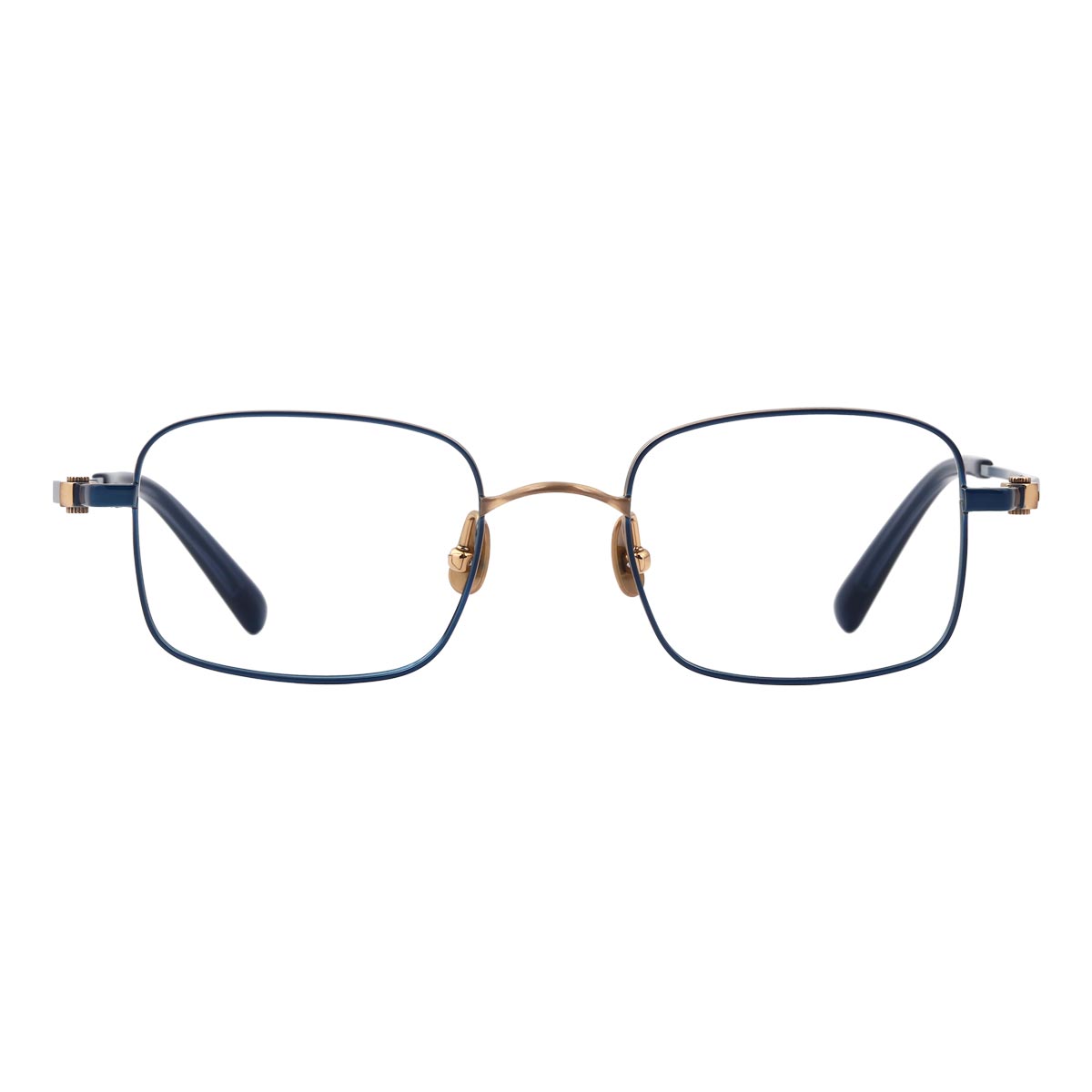 AD9012 Pure Titanium Square Optical FramesFor sensitive-skin daily wear, these lightweight hypoallergenic titanium frames support prescription and blue-light lenses for long use.View Product →
When to Replace the Nose Pads or the Frame
Replace the pads first if the metal underneath is still smooth. Pads are inexpensive and take a minute to change; frames with pitted pad arms cannot be fixed by new pads, because the corrosion source stays in contact with skin.
- Pads are hardened, yellowed or cracked, or the surface no longer grips.
- Plating is visibly worn through and bare copper shows at the pad arm.
- Green residue returns within two or three days of a thorough clean.
- Skin under the pads stays red, dry or itchy after cleaning.
- Pad arms are loose, bent or pitted, so replacement is the practical route.
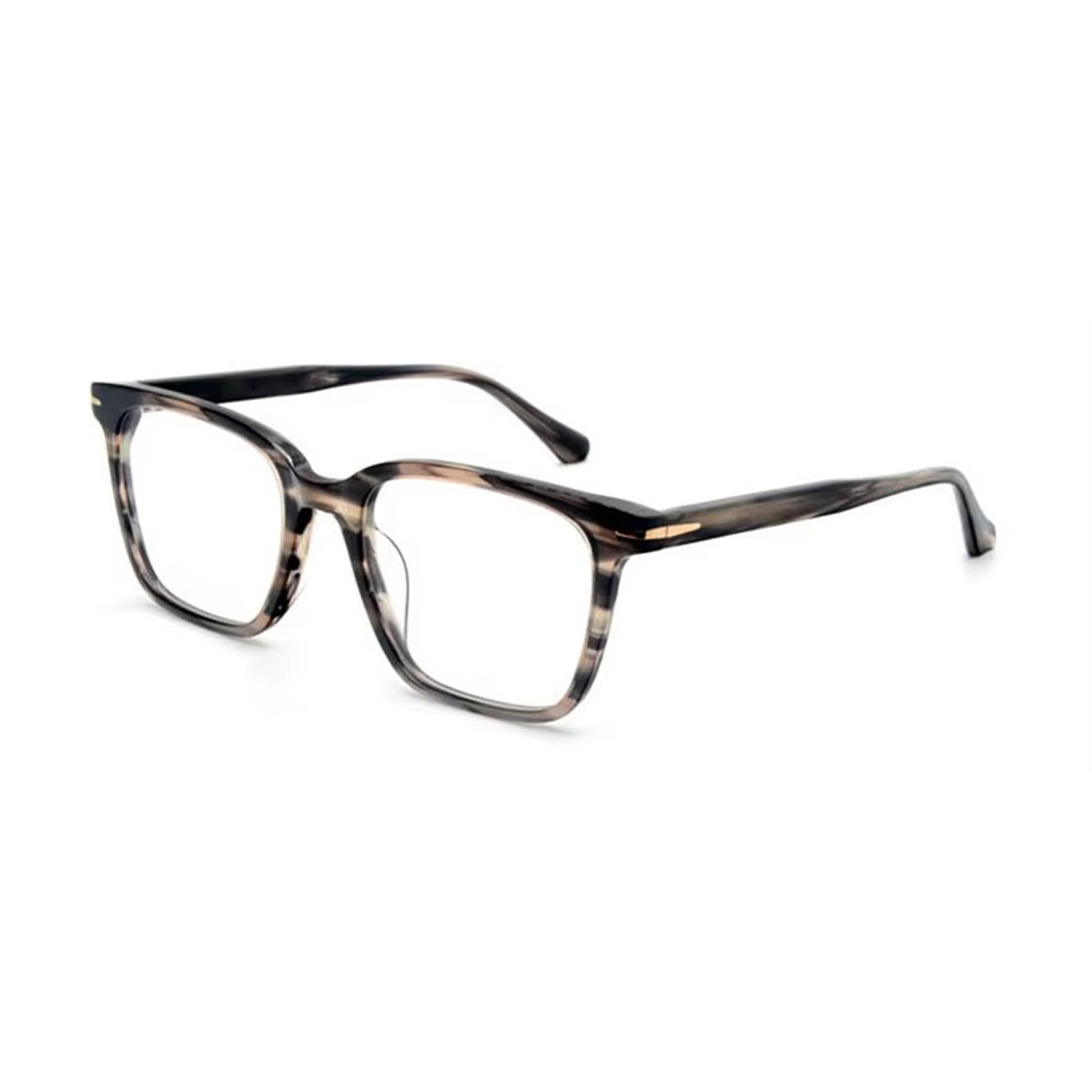
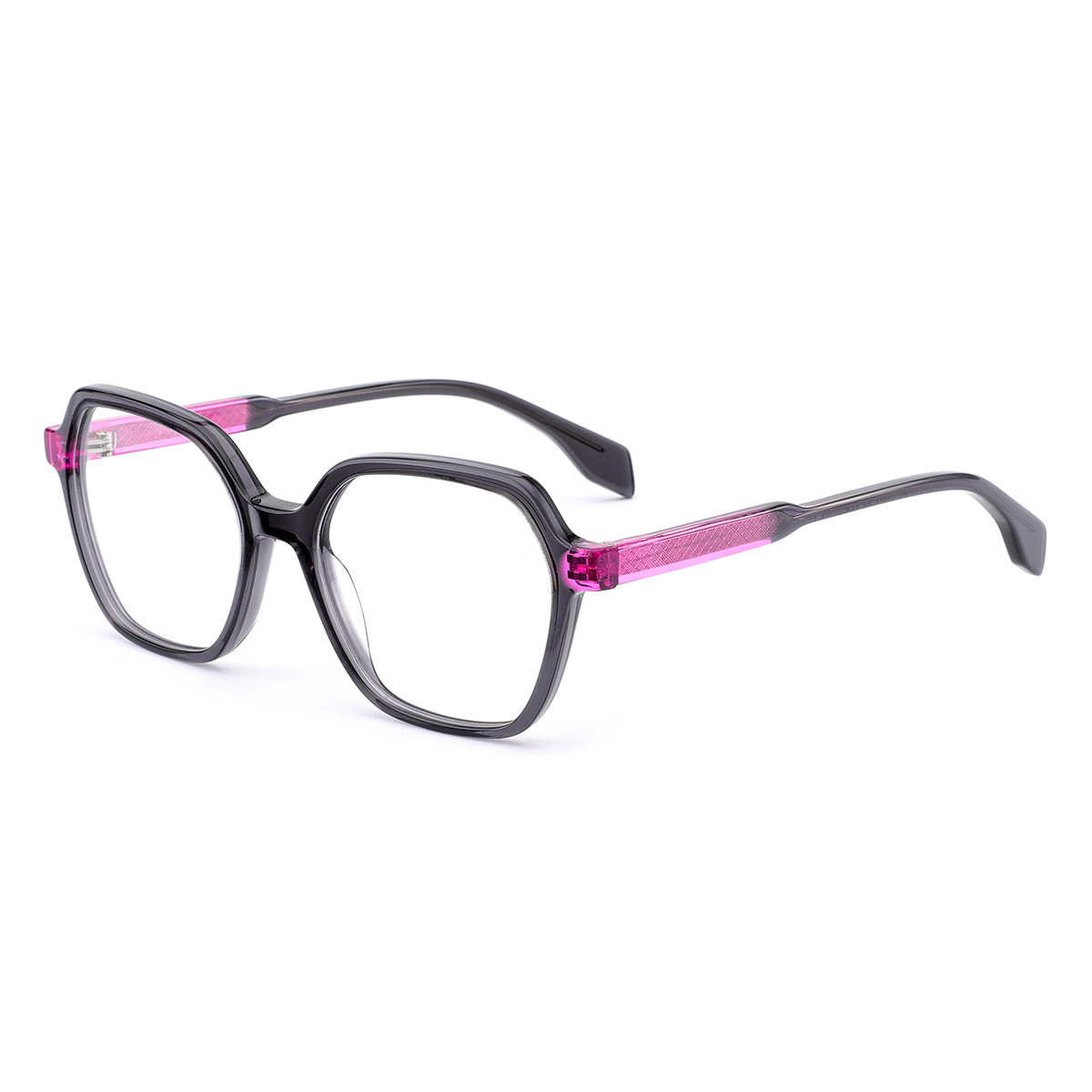 Retro classic tortoiseshell acetate optical glassesRetro classic tortoiseshell acetate optical glasses reproduce the elegance of the golden age with classic textures and interpret contemporary craftsmanship with crafts...View Product →
A Prevention Routine That Actually Works
Consistency beats intensity: thirty seconds of maintenance after each wear prevents most buildup. Wipe the pads and bridge with a dry microfibre cloth every evening, wash the frame with soapy water once a week, and dry it completely before it goes back in the case. Rotate two pairs if you wear glasses all day, keep the case ventilated rather than sealed in a humid bathroom, and apply sunscreen or hairspray before putting the frame on, not after. Silicone pads resist buildup better than PVC and are cheap enough to replace twice a year.
What Buyers Should Specify When Sourcing Frames
Green residue is a specification problem before it is a cleaning problem, so write the requirement into the purchase order. Ask for the pad arm substrate and plating thickness, request artificial sweat and salt-spray test results with the hours stated, confirm silicone rather than PVC pads, and check that acetate colours are dyed through rather than surface-coated. A frame that passes a longer sweat test costs slightly more per unit and returns far fewer complaints from wearers with sensitive skin.
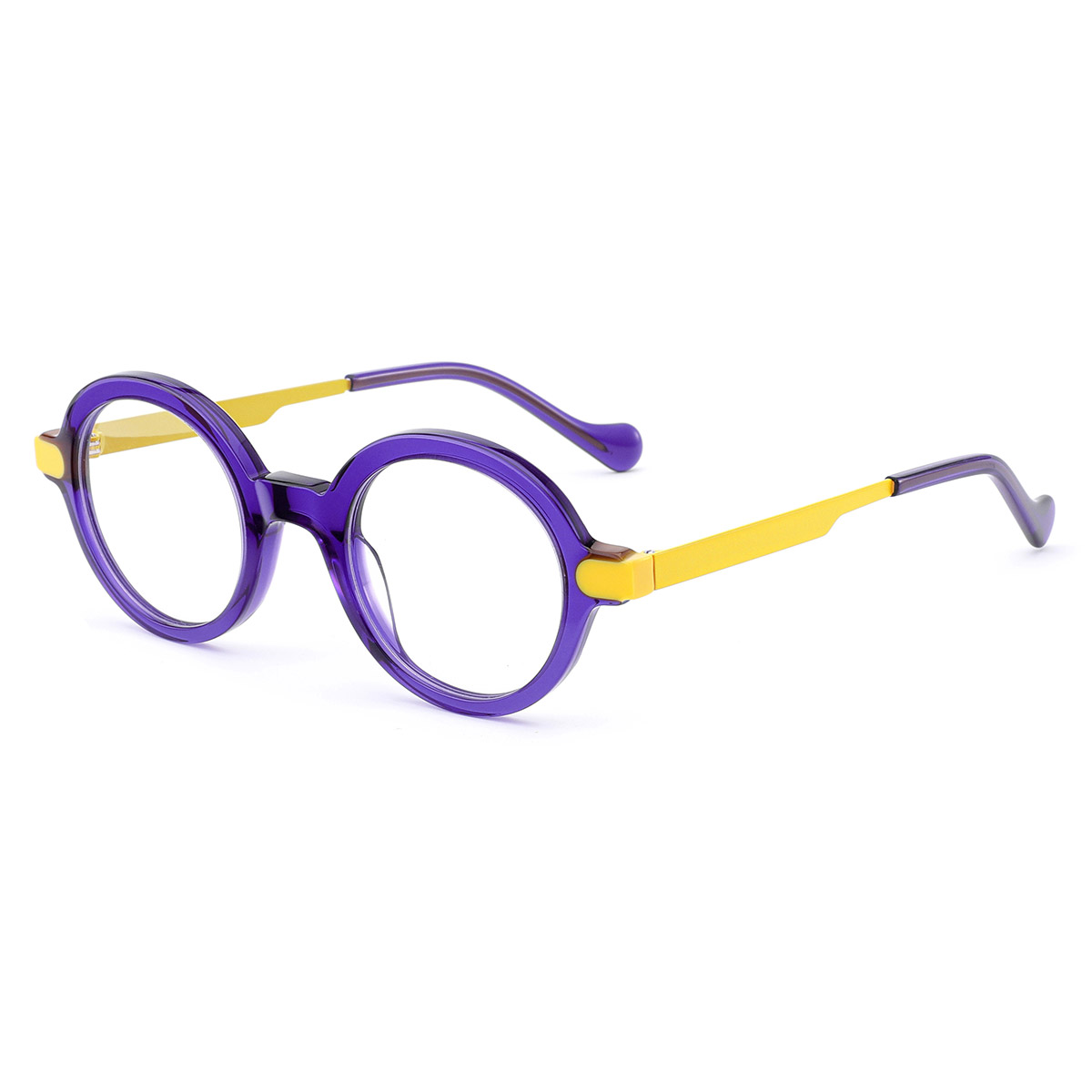
 ES2303 Titanium and Ultem Round Optical FramesFor sensitive-skin wearers checking allergy and corrosion specifications, these flexible titanium-Ultem frames use silicone pads for long-wear comfort.View Product →
Frequently Asked Questions
Is the green stuff on glasses dangerous?
No, in ordinary amounts it is not toxic. It is copper corrosion mixed with skin debris, and the realistic concerns are skin irritation, stained pads and a frame that is quietly corroding.
Does it mean my frame is low quality?
Not automatically. Most metal frames use copper alloys at the pad arms, so some green is normal over time. Fast and repeated returns usually indicate thin plating rather than a cheap brand.
Do titanium frames turn green?
The titanium front does not corrode, but the screws and pad arms may still be alloy, and sweat residue alone can look greenish. Cleaning and occasional pad replacement still apply.
Can I use vinegar or baking soda?
Yes on bare metal pad arms, briefly, and no on coated lenses or plated decorative surfaces, where both can dull or streak the finish.
Why does it come back within a day?
Because the plating is already breached at the pad arm. Cleaning removes the visible residue, not the exposed copper, so the reaction restarts as soon as you sweat.
Are acetate frames immune?
Largely, since the front contains no metal, but the hinge core and screws can still corrode, and dyed acetate should not be wiped repeatedly with alcohol.