 Search
 EN
 English
 Deutsch
 Français
 Español
 italiano
 cn
 jp
 kr
Gray tinted glasses reduce the amount of light reaching your eye without repainting the world. A gray lens behaves like a neutral-density filter: it lowers brightness fairly evenly across the visible spectrum, so reds stay red, skin tones stay believable, and road markings stay recognizable. If you want one pair that handles daytime driving, outdoor errands, bright offices, and light-sensitive eyes, gray is the safest tint to specify.
The complication is that "gray" is a range, not a single product. Transmission can run from a barely-there 90% down to a near-opaque 8%, the base material changes weight and impact behavior, and polarization decides how much glare actually disappears on a wet road. Below is what each variable does, plus the numbers worth writing into a purchase order.
Content
- 1 What Gray Tint Actually Does to Light
- 2 Gray vs. Brown, Green, and the Rest
- 3 How Dark Should the Gray Be?
- 4 Where Gray Works, and Where It Doesn't
- 5 Lens Material and Polarization Decide How the Gray Feels
- 6 Frames, Fit, and the Face Value of Gray
- 7 Clip-Ons and Photochromic Gray: Two Ways to Avoid a Second Pair
- 8 What to Put on a Gray Tint Specification
- 9 FAQ
What Gray Tint Actually Does to Light
Gray works as a neutral-density filter: it dims light fairly evenly instead of absorbing one narrow band of the spectrum.
That one property explains most of what people like about it:
- Color accuracy. Because absorption is spread across the spectrum, objects keep their relative colors. Traffic lights, dashboard displays, and fabric samples read more faithfully than through brown or green glass.
- No artificial contrast boost. Gray does not make edges pop the way amber or yellow does. It simply makes the scene darker and calmer, which is easier on the eye under strong sun.
- Predictable stacking. A gray base takes anti-reflective, hard-coat, and hydrophobic layers without the visible color drift that dyed warm tints sometimes show after coating.
The trade-off is that gray gives you nothing extra. It does not sharpen contrast in flat light, and it does not selectively filter blue light unless a dedicated blue-absorbing layer is added; a plain gray tint only lowers overall brightness, which incidentally reduces how much blue reaches the eye. If your goal is blue-light reduction specifically, ask for that function by name rather than assuming the gray color delivers it.
Gray vs. Brown, Green, and the Rest
Gray is the most neutral option; every other tint family trades some color accuracy for a specific benefit.
| Tint color | Light handling | How colors look | Typical use |
|---|---|---|---|
| Gray | Even reduction across the spectrum | Near-natural, cool and calm | Everyday wear, daytime driving, screens, light sensitivity |
| Brown / amber | Absorbs short wavelengths more heavily | Warmer, blues slightly muted | Fishing, golf, hazy or flat light |
| Green | Balanced absorption with a slight blue/green bias | Slightly muted, classic look | General sun wear, daytime driving |
| Yellow | Strong short-wavelength absorption | Brighter, higher apparent contrast | Low light, shooting sports, night driving at low density |
| Rose / copper | Trims blue and green | Warmer, enhanced depth cues | Skiing, snow, flat light on water |
| Blue / purple | Absorbs red and yellow | Cool, stylized, less natural | Fashion, low-density indoor use |
Practical rule: if the wearer does several different things in one day, gray creates the fewest disappointments. If the wearer does one thing in difficult light — fishing in haze, skiing on overcast snow — a warm tint earns its keep.
How Dark Should the Gray Be?
Match visible light transmission (VLT) to the light the wearer actually spends time in, not to how dark the lens looks on a shelf.
| VLT range | Category | Where it fits |
|---|---|---|
| 80–92% | Very light / cosmetic | Screen-heavy work, fluorescent offices, mild photophobia |
| 43–80% | Light to medium | Overcast days, commuting, moving between indoors and out |
| 18–43% | Medium to dark | Standard daytime sun wear, driving in daylight |
| 8–18% | Dark | Beach, snow, altitude, long outdoor exposure |
| 3–8% | Very dark | Glacier and high-mountain use; restricted or banned for driving in many markets |
In production, a workable VLT tolerance is ±3%. Tighter than that raises cost quickly on dyed nylon and polycarbonate, because bath concentration and dwell time both drift. Batch-to-batch color consistency is usually tracked separately as a Delta-E limit; a limit of about 1.5 keeps two lenses in the same pair from looking different in daylight.
Where Gray Works, and Where It Doesn't
Gray is the most versatile tint for daytime and mixed indoor-outdoor use, but it is the wrong tool in low light unless the density is very light.
Good fits
- Daytime driving and commuting, especially with vertical polarization to cut road and windscreen glare.
- Outdoor sport where color judgment matters — cycling on marked roads, sailing, golf.
- Bright offices and screen-heavy work, at 80–92% transmission.
- Light sensitivity, migraine triggers, and post-surgical glare sensitivity at low density.
Weak fits
- Night driving or dusk, where any medium-to-dark gray removes too much usable light.
- Color-critical matching work — even a neutral tint shifts perceived tones slightly.
- Flat light on snow or water, where a rose or amber lens gives better depth cues.
Lens Material and Polarization Decide How the Gray Feels
The same VLT in a different substrate produces a different product, because material drives weight, impact behavior, and how cleanly the gray reads.
- TAC — a laminated polarized film, light and inexpensive, the workhorse of mid-market sunglasses.
- Nylon — high toughness and strong optical clarity, takes dye evenly, and holds up well in polarized form.
- Polycarbonate — the impact-resistant choice for sport, safety, and children's eyewear.
- CR-39 and cast resin — excellent optical quality for prescription sun lenses with moderate impact needs.
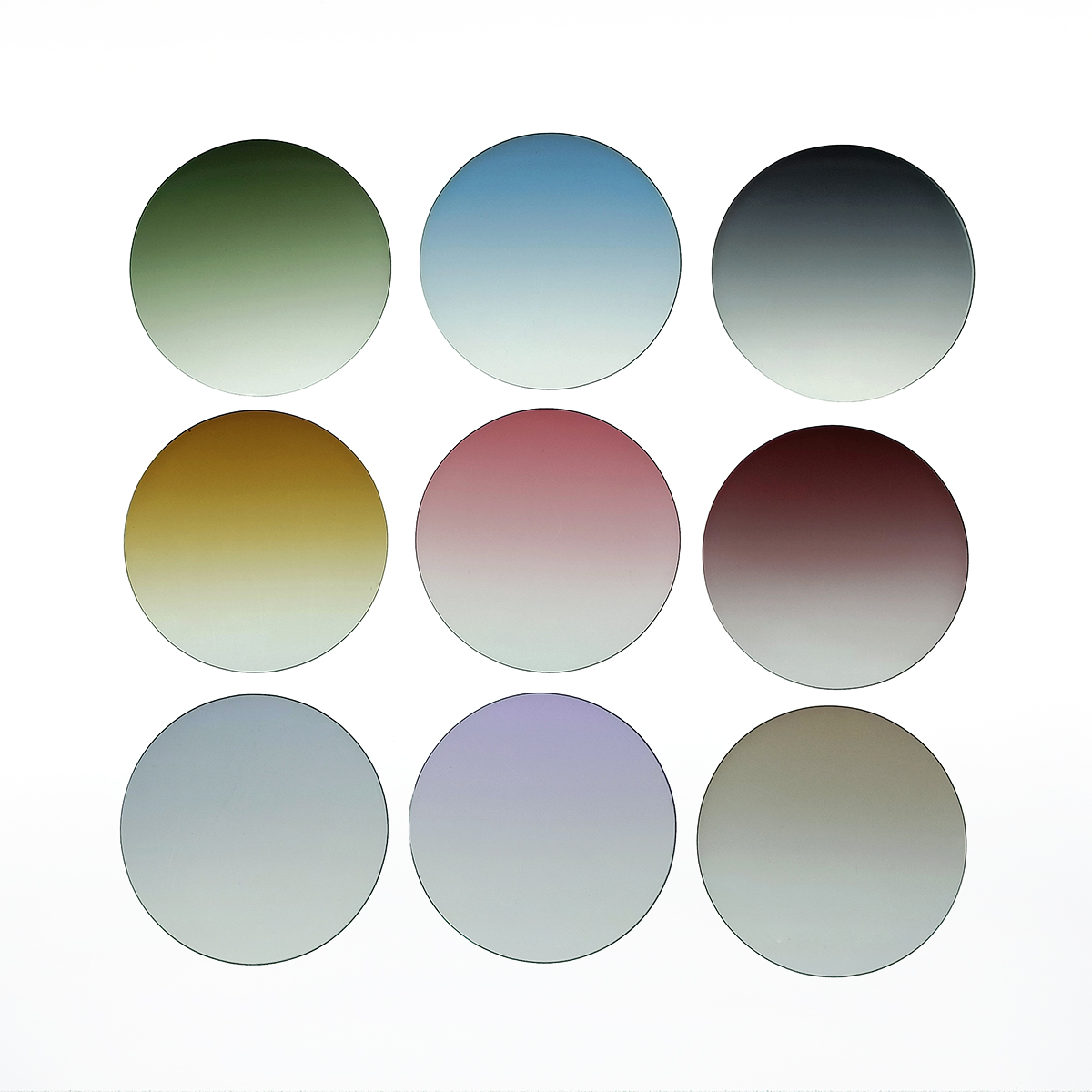 Nylon UV400 Polarized Tinted Sun LensThis Nylon UV400 Polarized Tinted Sun Lens uses aviation-grade nylon substrate and precision optical coating design to provide all-round visual protection for outdoor ...View Product →
Polarization is the second decision, and it changes the perceived density. A polarized gray lens often feels darker than a non-polarized lens at the same VLT, because horizontal glare from roads, water, and snow is removed rather than merely dimmed. For driving and water sports, specify polarization and a UV400 cut-off; for interior use at high transmission, polarization adds little.
Frames, Fit, and the Face Value of Gray
Gray reads as a cool, understated color, and the frame it sits in decides whether the result looks quiet or severe.
- Dark acetate with a dark gray lens: classic and formal, best with medium-to-dark density.
- Clear or translucent acetate with a light gray lens: softer and easier to wear every day.
- Thin titanium or metal frames: minimal and light-looking, but keep lens density moderate so the eyes stay visible.
- Oversized shapes: drop one density step, otherwise the lens reads as a mask rather than a tint.
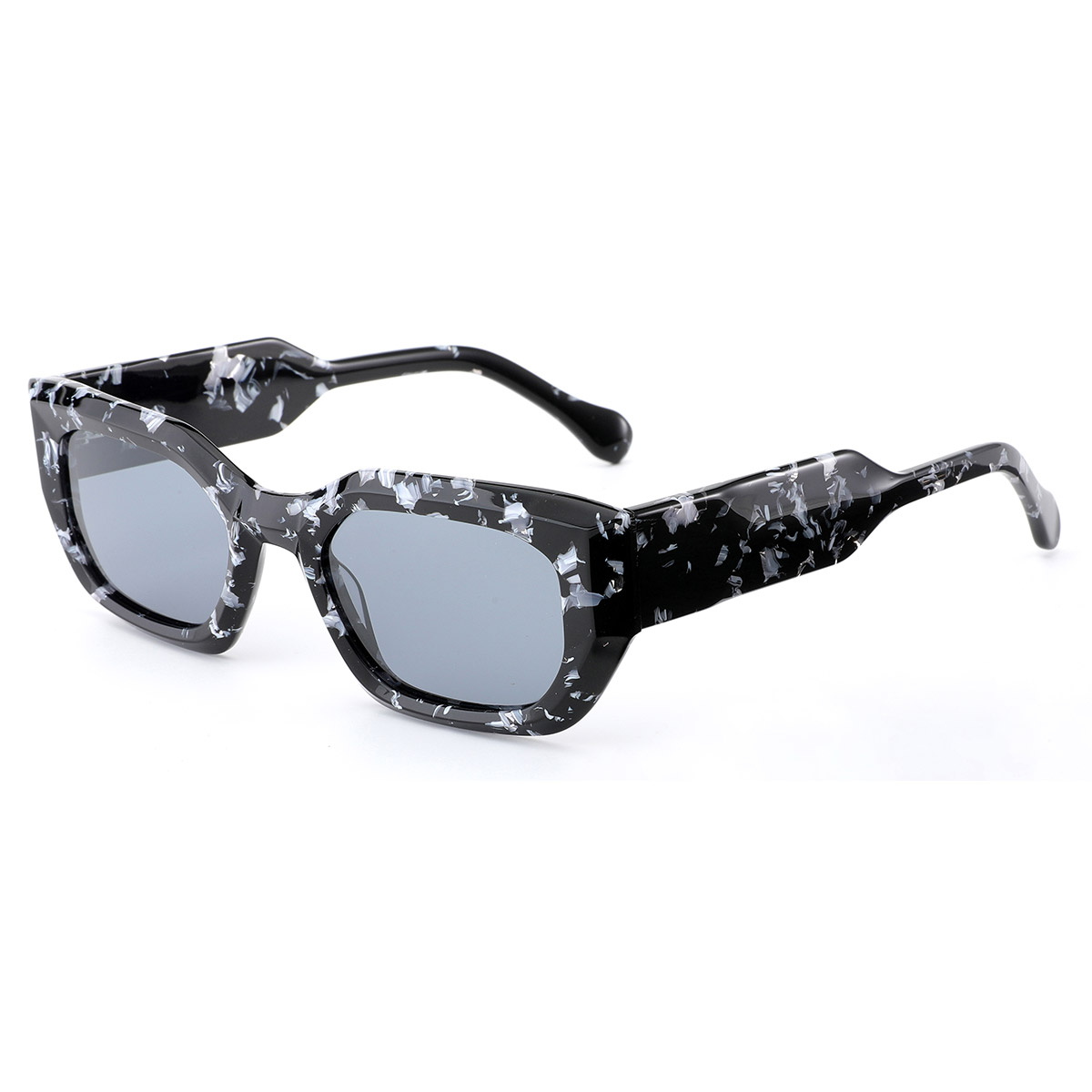 Vintage Acetate Sunglasses with TAC Polarized LensesThese unisex vintage-style acetate frames use TAC polarized lenses to reduce glare and UV exposure, with elastic temples for stable daily wear.View Product →
Shape and tint interact more than most buyers expect, and the effect is easy to see across a full sunglasses range laid out side by side. For a broader look at how tint and frame styling work together, our guide on sunglasses as fashion and eye protection covers the styling side in more detail.
Clip-Ons and Photochromic Gray: Two Ways to Avoid a Second Pair
When one frame has to serve indoors and outdoors, a detachable gray clip-on or a photochromic lens usually costs less than a second prescription pair.
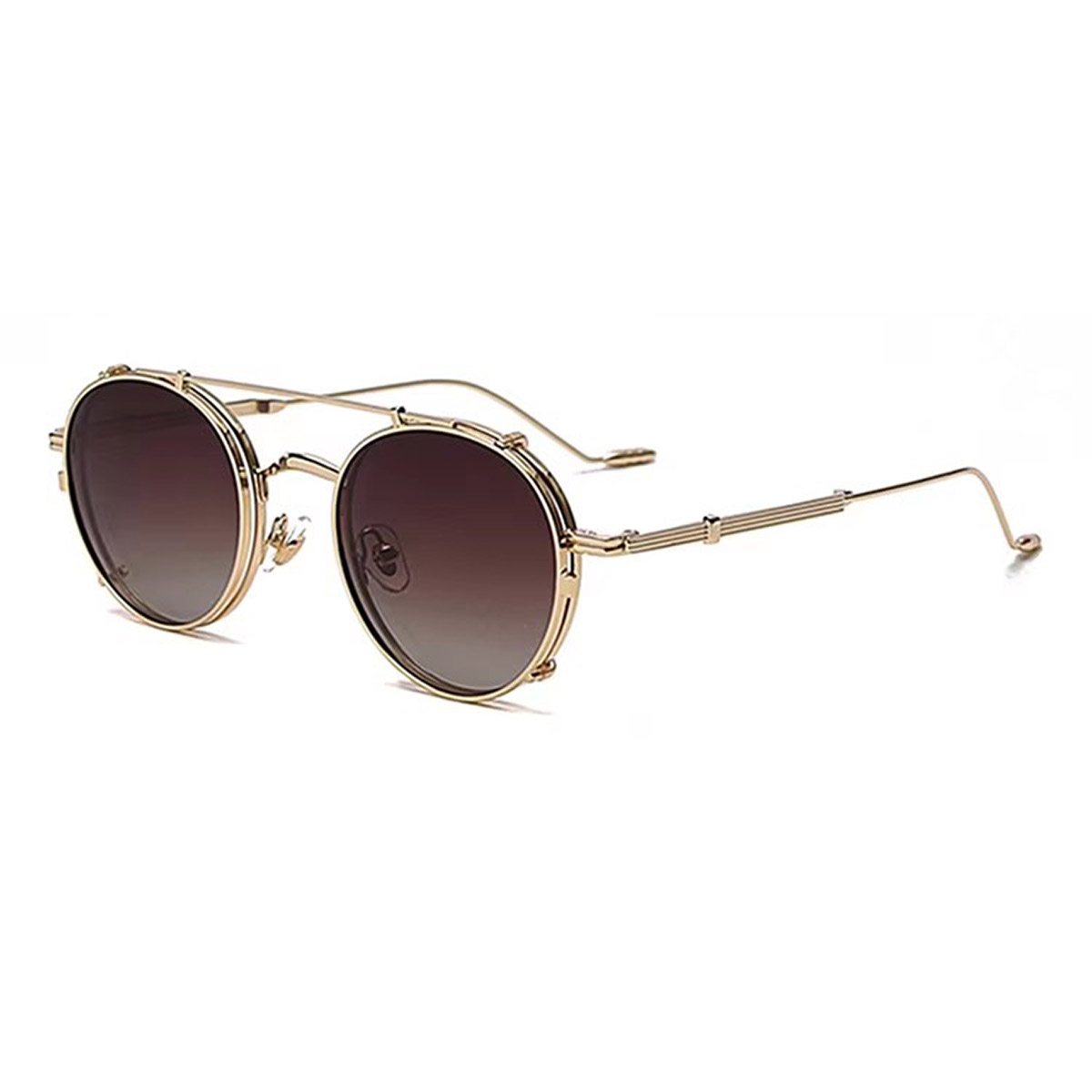 Magnetic Polarized Clip-On Sunglasses for Prescription FramesThese magnetic clip-on lenses add UV400 polarized glare protection to a metal frame, switching quickly between everyday glasses and outdoor sunglasses.View Product →
A magnetic gray clip-on is the more predictable option for driving: it attaches only when needed, adds a few grams, and keeps the same prescription and fit. Photochromic gray is more convenient on foot, but remember that windscreens block most UV, so photochromic lenses often stay lighter behind the wheel than they do outdoors. If the wearer drives daily, a clip-on or a fixed gray sun lens is the better answer.
What to Put on a Gray Tint Specification
A gray tint program only stays consistent across shipments if the purchase order pins down five things.
- Target VLT plus tolerance — for example 15% ±3% for dark sun wear.
- Polarization state and efficiency, typically 99% or better when glare control is the point.
- UV cut-off, stated as UV400 where the lens should block up to 400 nm.
- Color consistency across batches, expressed as a Delta-E limit on the assembled lens.
- Applicable standard and test method — filter category under EN ISO 12312-1, impact requirements for sport and safety frames, and any regional labelling rules.
Buyers who source frame and lens together can approve tint and frame color in one round, which removes the most common mismatch complaint: a gray lens that looks green against a warm acetate. Ask for a physical sample pair, not just a digital swatch, before signing off.
FAQ
Do gray tinted glasses help with light sensitivity?
Yes, at light densities. A 60–85% transmission gray lens takes the edge off bright interiors and screens without making the wearer feel blind when they step into a dim corridor.
Can I wear gray tinted glasses at night?
Only at very light transmission, and never behind the wheel in most jurisdictions. Medium or dark gray removes light you need for night vision and delays your response to headlights.
Is gray or brown better for driving?
Gray, for most drivers. It preserves traffic-light colors and does not exaggerate contrast, which keeps hazard perception predictable. Brown is a better pick for haze, fog, and flat light.
Do gray lenses block blue light?
Not by themselves. A gray tint lowers total brightness across the spectrum, so blue light reaching the eye drops alongside everything else, but targeted blue filtering requires a separate absorbing layer or coating.
Can a gray lens stay neutral once polarized?
Generally yes, though heavy polarization can shift a gray toward a slight blue-green cast in low-cost film lenses. Specify the target color under D65 lighting and check a finished sample rather than a raw film swatch.